Fashion, Agriculture, and a Circular Future: Seneca Polytechnic F.A.B.R.I.C.
Seneca Polytechnic’s proposed F.A.B.R.I.C. would connect fashion, agriculture and waste management in one centre for education, research, and industry.
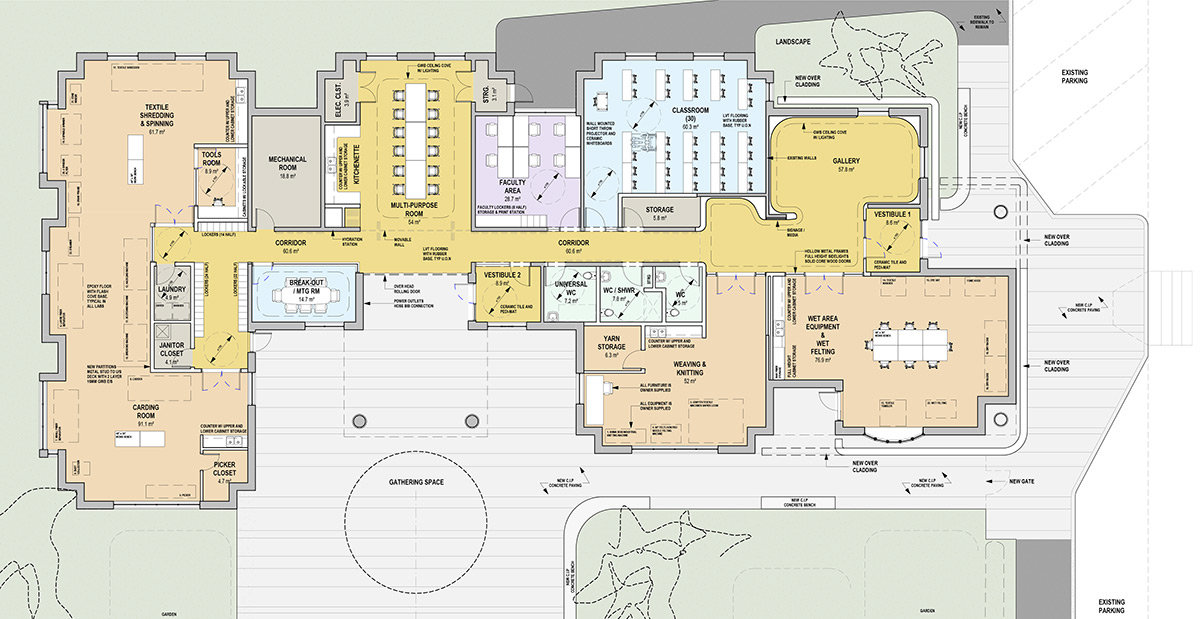
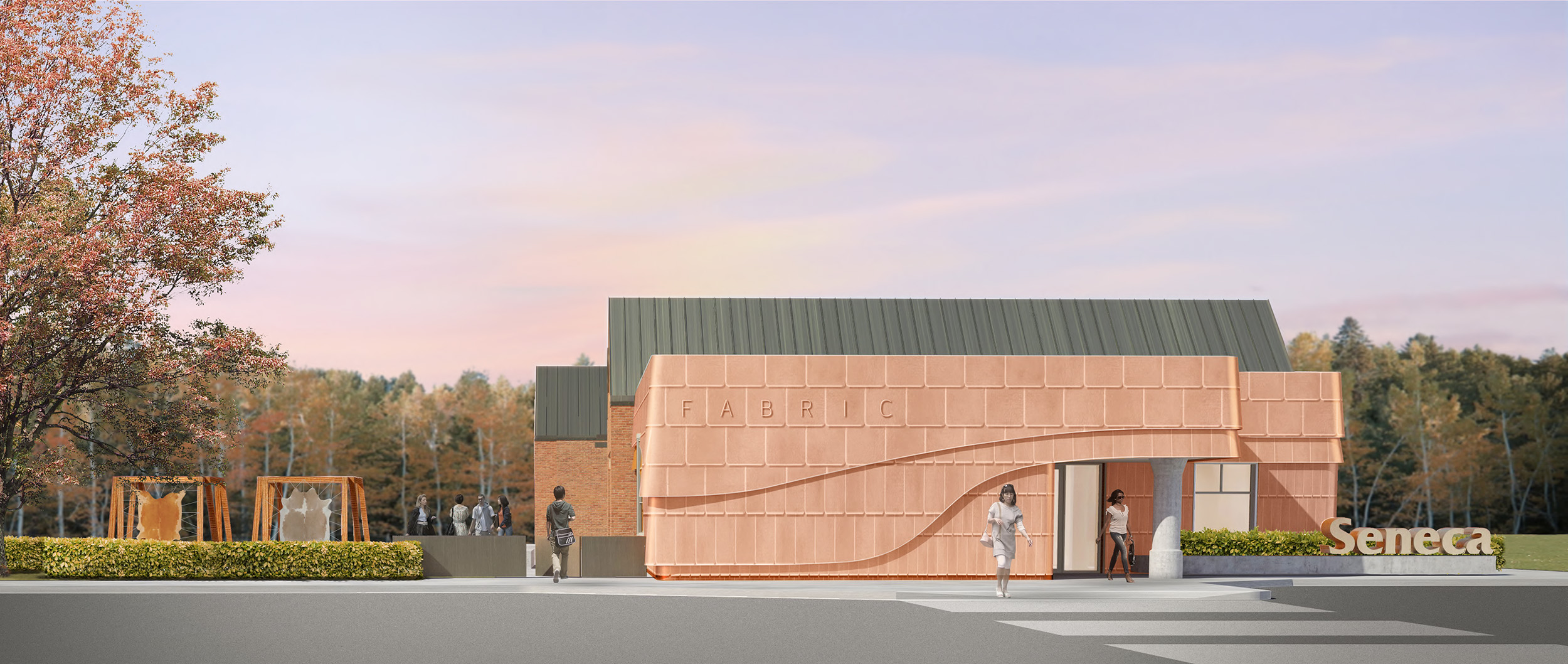
Our feasibility study reuses the former KOLTS daycare at Seneca’s King Campus. Set within 700 acres of farmland, the centre would link indoor learning with outdoor research. Students, researchers and industry partners could study the textile cycle from fibre production to manufacturing, reuse and recycling. The proposal uses existing buildings, land and expertise to test a more circular model for fashion.

Advancing a regenerative textile cycle that begins and ends with the soil.
Diagram source: Fibershed.org
Indigenous perspectives played an important role in shaping the project vision. Early engagement with Seneca’s Indigenous Education team highlighted opportunities to incorporate regenerative practices into the curriculum and site planning. Concepts explored included the cultivation of medicine gardens and dye-producing plants that could support the creation of natural, non-toxic textile dyes, further strengthening the connection between land, learning, and production.