
Advancing Sustainable Fashion Through Education and Innovation
Seneca Polytechnic / F.A.B.R.I.C.
-
Sector
Higher Education
-
Location
Ontario
-
Client
Seneca Polytechnic
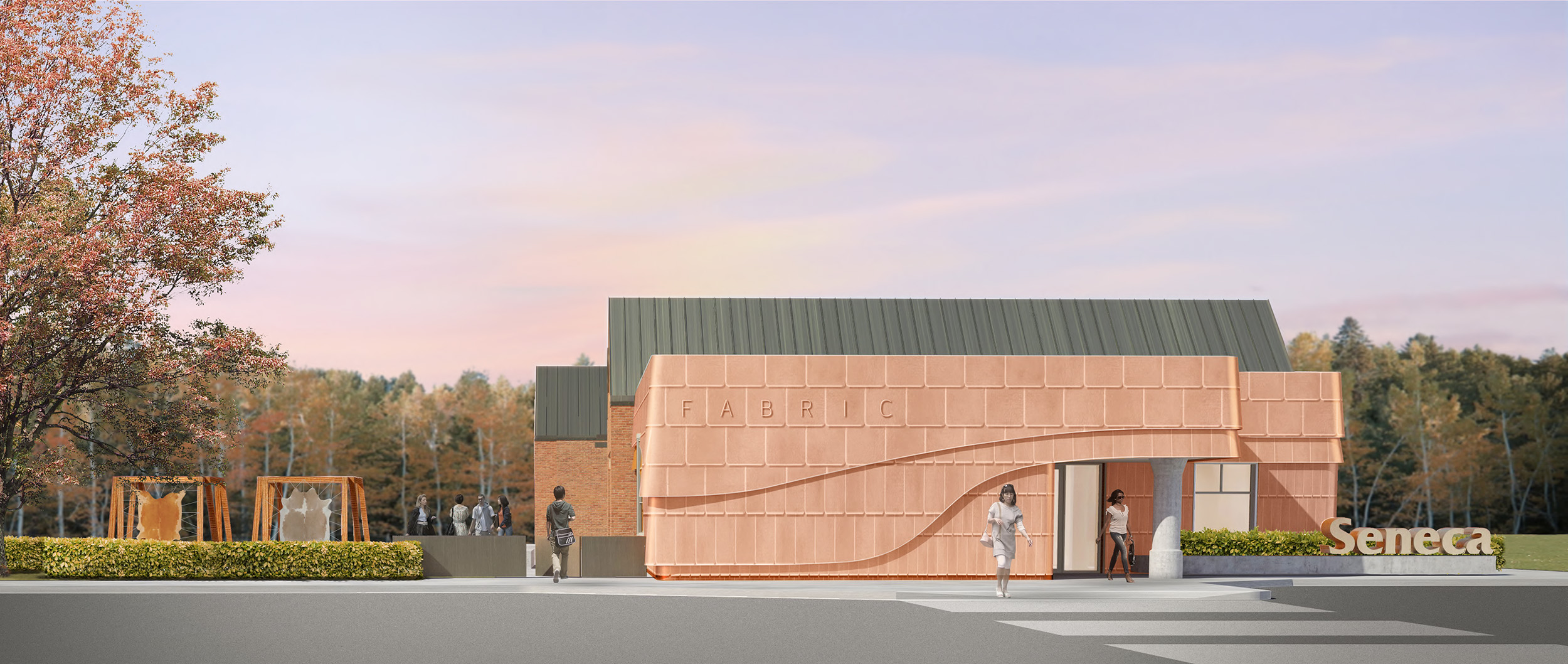
Architecture Counsel prepared a feasibility study for Seneca Polytechnic’s Fashion from Agriculture: Business, Research, and Innovation Centre (F.A.B.R.I.C.), an innovative interdisciplinary initiative that brings together fashion, agriculture, and waste management to advance a more sustainable and responsible future for the fashion industry.
The project proposes the adaptive reuse of the former KOLTS daycare building at Seneca’s King Campus, transforming it into a leading-edge facility for education, applied research, and manufacturing innovation. Situated within more than 700 acres of agricultural land on the traditional territory of the Mississaugas of the Credit First Nation, the site provides a unique opportunity to integrate indoor learning environments with hands-on outdoor teaching and research spaces.
F.A.B.R.I.C. is envisioned as a hub where students, researchers, industry partners, and community stakeholders can collaborate to explore every stage of the textile lifecycle—from fibre production and processing to spinning, weaving, knitting, apparel manufacturing, and textile recycling. By leveraging resources already present on campus, including agricultural lands, livestock by-products from Seneca’s Veterinary Technician Program, and expertise within the School of Fashion, the Centre supports a circular economy approach to textile production and consumption.
Indigenous perspectives played an important role in shaping the project vision. Early engagement with Seneca’s Indigenous Education team highlighted opportunities to incorporate regenerative practices into the curriculum and site planning. Concepts explored included the cultivation of medicine gardens and dye-producing plants that could support the creation of natural, non-toxic textile dyes, further strengthening the connection between land, learning, and production.
Once realized, F.A.B.R.I.C. will establish a new model for interdisciplinary education and research, creating dynamic spaces that support innovation while addressing critical challenges facing Canada’s fashion, agricultural, and waste management sectors. Through adaptive reuse, sustainable design, and industry collaboration, the project lays the foundation for a more resilient and environmentally responsible future.